Prioritization in action: the Oregon Ocean Cluster
How the 100% Prioritization Matrix Tool identified Oregon's priority chains.
At a glance
- Landings: large-volume landings including Pacific Whiting, Pink Shrimp and Dungeness Crab.
- Candidate end products: collagen, gelatin, fish oil, trypsin and chitosan, from heads, frames, skin, viscera and shells.
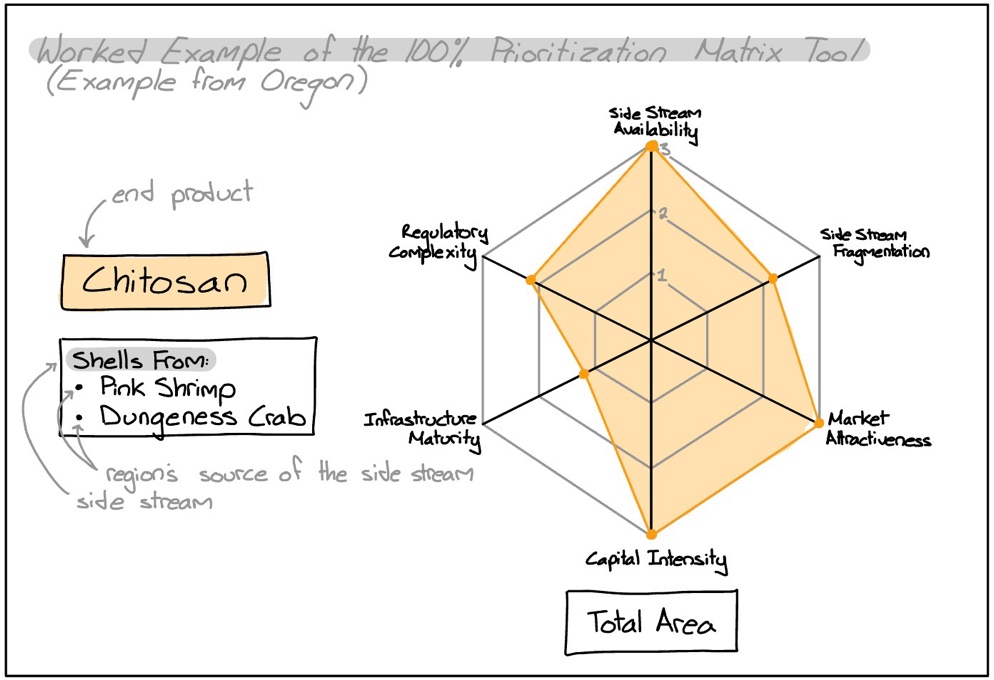
- Priority chains identified: Fish Oil and Chitosan.
The 100% Prioritization Matrix Tool was built and validated across two geographically, economically and ecologically distinct clusters: the Oregon Ocean Cluster and the Scottish Ocean Cluster. The same framework produced very different results in each region, demonstrating its applicability across diverse geographies and local contexts.
The Oregon Ocean Cluster is in the Pacific Northwest of the United States, with large-volume landings including Pacific Whiting, Pink Shrimp and Dungeness Crab, whose side-streams (heads, frames, skin, viscera, shells) can support collagen, gelatin, fish oil, trypsin and chitosan.
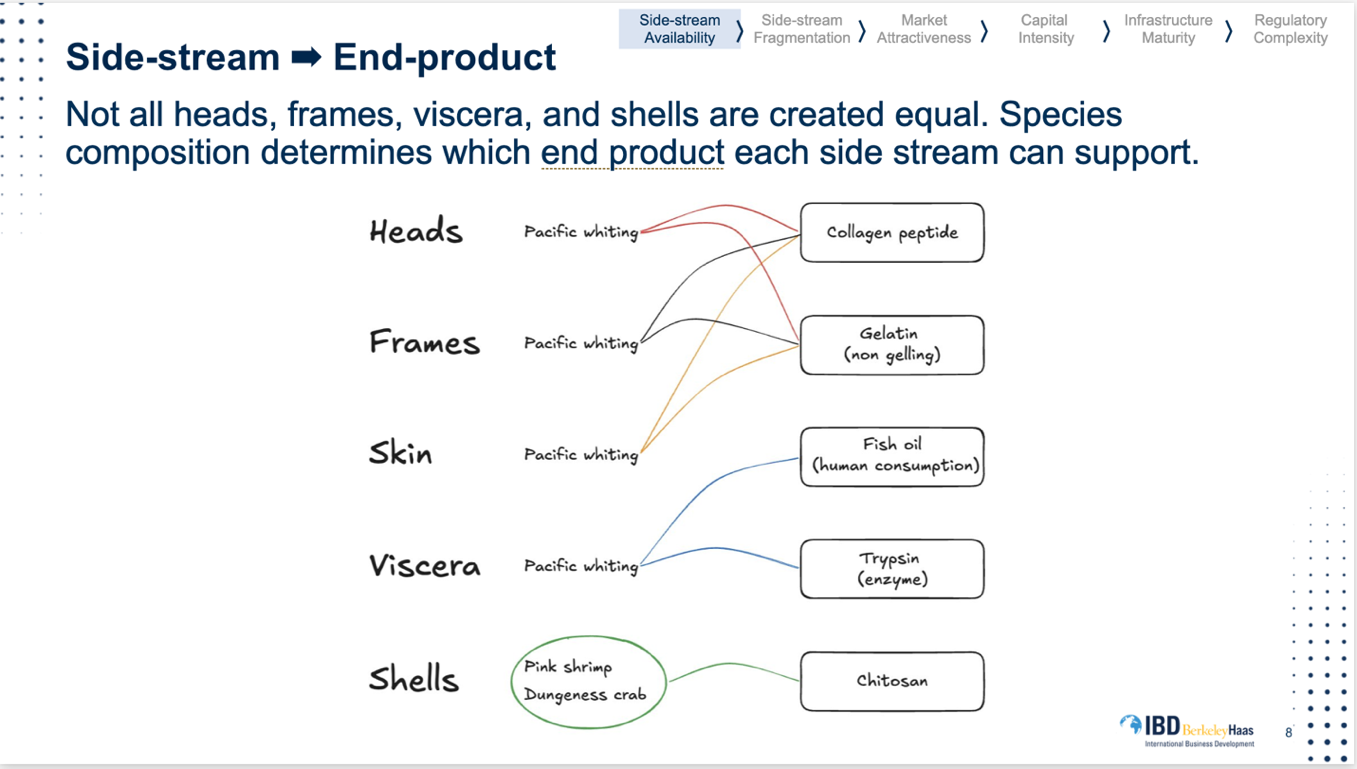
Scoring surfaced Pink Shrimp shells as the strongest opportunity. The other primary species are largely sold whole or minimally processed, limiting accessible side-stream volumes. Fish Oil and Chitosan were identified as Oregon's priority chains, though smaller-scale opportunities like fish leather, particularly abundant in Oregon, would warrant a separate assessment at higher resolution.
“The Pacific Northwest has an awful lot of skin off fish processing … Oregon has the opportunity that they have both the shoe companies and the growing apparel industry.”Tasha Nathanson, 7 Leagues Leather
With the Oregon Ocean Cluster · How to run the 100% Prioritization Matrix Tool · Oregon Ocean Cluster case study